



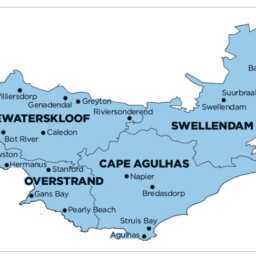



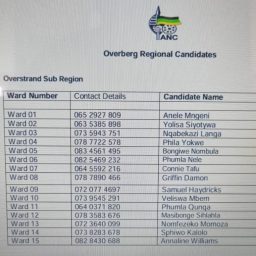






HERMANUS — As municipal election campaigns heat up across the Overstrand, voters inspecting candidate lists will notice an exceptionally crowded ballot—with between 15 and 18 candidates contesting each of the 15 wards.
Among those long lists of names, attentive readers often spot a confusing detail: Why is the exact same political candidate running as the ward nominee in every single ward from Kleinmond to Gansbaai?
Can one person actually represent 15 different wards simultaneously on a municipal council?
The short answer is no—but behind this seemingly strange tactic lies a calculated mathematical strategy designed to maximize every single vote cast across the Overstrand.
Here is a breakdown of how our local government voting system works, why smaller political parties use this approach, and how much it actually costs them.
1. The Three-Ballot System: How Local Votes Are Counted
In local government elections across municipalities like the Overstrand, voters complete three separate ballots:
- Ward Ballot: Voting for a specific individual candidate to directly represent your neighborhood ward.
- Local PR Ballot: Voting for a political party to allocate Proportional Representation (PR) seats on the Overstrand Municipal Council in Hermanus.
- District PR Ballot: Voting for a political party to allocate PR seats on the Overberg District Council in Bredasdorp.
To determine how many total seats a political party gets on the Overstrand Council, the Electoral Commission of South Africa (IEC) doesn’t just count the Local PR ballot. They add together all the Ward votes AND all the Local PR votes cast for that party across all 15 wards.
2. Doubling Up: Why Small Parties Re-use One Candidate
With up to 18 candidates per ward, larger parties field 15 individual local representatives. However, smaller or newer political parties often lack the local infrastructure, funding, or volunteers to recruit and vet 15 separate, dedicated ward candidates across the region.
If a party only registers on the Local PR ballot and skips the Ward ballot entirely, they throw away 50% of their potential vote pool toward their council seat quota.
By placing a single candidate (often their party leader or top PR candidate) on the Ward ballot in all 15 wards:
- They capture every possible vote: A supporter can vote for the party on both the Ward ballot and the PR ballot, effectively doubling the party’s vote tally toward winning council seats.
- Every vote pools together: Even if that single candidate loses the individual ward race in Ward 1, Ward 3, or Ward 10, every single vote cast for them is added into a giant municipal pool. This combined total helps the party win Proportional Representation (PR) seats on council.
3. What if that single candidate actually wins multiple wards?
If a candidate standing across all 15 wards manages to win two or more individual wards, electoral rules state they must choose one ward to represent.
They officially take that single ward seat, and a by-election is immediately triggered in the remaining wards to elect new councillors. (In practice, smaller parties using this strategy rarely win individual wards outright; their primary goal is pooling ward votes to secure PR seats).
4. What does it cost a party to run a candidate in all 15 wards?
You might assume that fielding a candidate across 15 separate wards would incur massive registration fees. In reality, it costs a political party zero extra rand in IEC deposit fees.
Under IEC rules:
- Registered political parties pay one flat municipal deposit (approximately R2 800 for a local municipality with wards).
- That single flat fee covers the party’s PR list AND allows them to nominate candidates in all 15 wards.
Whether a party enters 1 candidate in 1 ward, 1 candidate across all 15 wards, or 15 different candidates across 15 wards, the IEC deposit remains exactly the same.
(By contrast, independent candidates who do not belong to a registered party list must pay a separate deposit per ward contest).
Furthermore, if the political party wins at least one PR seat on the municipal council or achieves 10% of valid votes, the IEC fully refunds their deposit.
The Bottom Line
When you see 15 to 18 candidates listed in your ward and notice the same name appearing across all 15 Overstrand wards, it isn’t an administrative error. It is a cost-effective, legal strategy that allows smaller parties to contest every ward and collect every possible vote across the municipality to secure a seat at the council table.

What do you think?
Comments