











Editor’s Note & Correction
An earlier version of this article contained an error in our electoral calculations, stating that a shift of 1,200 votes could end the Democratic Alliance’s majority in the Overstrand Municipality.
In the 2021 municipal elections, the DA secured 17 out of 27 seats with ~62.9% of the total combined vote. On an expanded 29-seat council, an absolute majority requires 15 seats. To lose single-party control (falling to 14 seats), the DA must lose a net of 3 seats—representing a total vote drop of roughly 10% to 11%. At typical local voter turnout levels, this equates to a swing of approximately 3,000 to 3,500 votes, rather than 1,200. We regret the calculation error and have republished the piece below with the corrected data and updated electoral context.
What It Would Take to End the DA’s Overstrand Dominance
Opinion by Gerard Grobler / Whalecoastreport
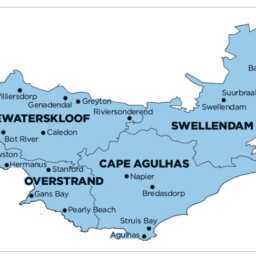
HERMANUS – The narrative that the Overstrand is a safe, untouchable stronghold for the Democratic Alliance (DA) is facing its toughest structural test yet.
Behind the facade of pristine coastal roads and award-winning municipal management lies a changing mathematical landscape. While the DA currently governs with a comfortable margin, a convergence of socio-economic pressures, growing right- and left-wing political forces, and ratepayer friction means the party is defended by a 3-seat safety cushion.
For the upcoming local government elections, opposition parties do not need an administrative collapse to drag the Overstrand into the coalition environment governing much of the Western Cape. They simply need to chip away at roughly 3,000 to 3,500 votes across the municipality.
The New Math: Why 15 Is the Only Number That Matters
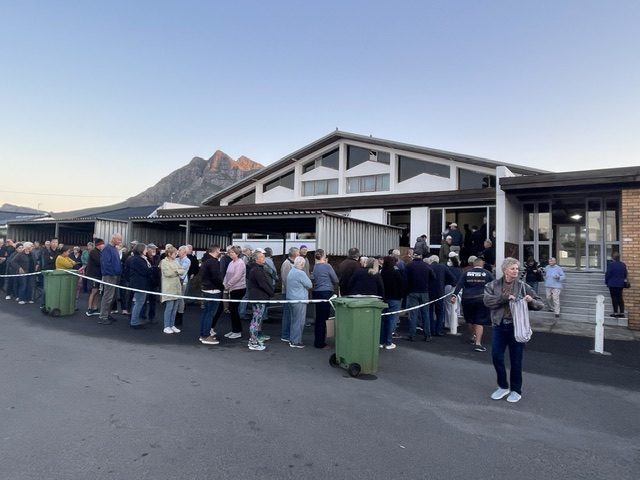
When voters head to the polls, they will be electing an expanded 29-seat municipal council (up from 27). To govern alone without reliance on coalition partners, a party must secure an absolute majority of 15 seats.
In 2021, the DA won 17 seats on a 27-seat council—polling approximately 62.9% of the total combined (Ward + PR) vote.
In a 29-seat council structure, the bar to govern outright requires at least 51.8% of the total vote share. Each council seat represents roughly 3.45% of the overall vote pool.
To strip the DA of its absolute majority and force it down to 14 seats, opposition parties and independents need a net swing of 3 seats away from the DA. At average municipal turnout levels (~30,000 to 34,000 cast ballots), a 10% to 11% shift in total support translates directly to a buffer of 3,000 to 3,500 votes.
While that buffer is substantially wider than a mere 1,200 votes, it remains vulnerable to multi-directional pressure across specific wards and voter bases.
The Forces Chipping Away at the Cushion
The DA does not need to suffer a major collapse to lose its 3-seat cushion. Instead, it faces a “death by a thousand cuts” scenario across several fronts:
- Socio-Economic Strain & Ratepayer Squeeze: Across traditional working-class and suburban bases alike, frustration is mounting over year-on-year increases in municipal accounts, electricity tariffs, and service charges. In a region with a high proportion of fixed-income pensioners, compounded by young families struggling with local housing costs, financial pressure is quietly eroding historical party loyalty.
- The Patriotic Alliance Surge in Working-Class Wards: The PA has consistently disrupted Western Cape elections, pulling significant swings directly from traditional party bases. In Wards 8 (Hawston), 14 (Blompark), and 9 (Proteadorp), even a modest PA vote surge drains the DA’s overall municipal PR vote pool.
- Conservative Growth (VF Plus): Support for the VF Plus continues to pose a threat in suburban strongholds—driven by discontent over property rates and service tariffs. Siphoning off PR votes in Sandbaai, Onrus, Hermanus, Kleinmond, and Gansbaai converts directly into PR seat allocations for the VF Plus.
- The Rise of Ward Independents: Localized independent candidates contesting municipal wards split the vote in suburban strongholds. Many voters adopt a split-vote strategy: voting DA on the ward ballot for a local councillor, but voting VF Plus or Independent on the PR ballot to register a protest over municipal rate hikes. Because Mixed-Member Proportional (MMP) rules combine both ballots to allocate total seats, split-ballot strategies directly deplete the DA’s overall seat yield.
- Township Realignment & Demographic Shifts: In Zwelihle (Wards 5, 6, 12) and Thembelihle (Stanford), parties like the Land Party and EFF continue to mobilize local bases. As these ground teams drive voter turnout in high-density areas, they lift the overall quota required to win seats across the entire municipality. Black South Africans now represent the single largest demographic grouping in the Overstrand (roughly 38% of the total population), making turnout in these wards a critical factor in seat distribution.
The Coalition Reality: What Happens at 14 Seats?
If the DA drops below the 15-seat mark, single-party control ends instantly. To reach a governing majority, pass municipal budgets, and elect a mayor, the DA would be forced into negotiations:
- DA + VF Plus / ACDP (Most Likely): A center-right alliance trading Mayoral Committee portfolios for a governing majority.
- A Fragile 1-Seat Coalition: A narrow 15-seat alignment that leaves council business vulnerable whenever a single councillor is absent or breaks ranks.
- The “Anti-DA” Alternative: A broad opposition front uniting regional and national opposition parties to form a minority or majority bloc—a scenario similar to hung councils elsewhere in the province.
The Battle for the Buffer
To counter these localized pressures, the DA relies heavily on a message of stability versus uncertainty—framing the election not around local tariff grievances, but as a defense against administrative disruption.
Citing warnings from provincial leadership about the fallout seen in hung Western Cape municipalities like Knysna, the DA uses the “coalition risk” narrative as its ultimate safety net to retain defecting voters. Opposition parties and independents, however, dismiss this as scaremongering designed to deflect from rising tariffs and public participation concerns.
Whether fear of instability overrides financial and political grievances will decide the result. While a 3,500-vote buffer provides the DA with a clear safety cushion, a sustained multi-front challenge across key wards could determine whether the Overstrand remains under single-party rule or enters coalition territory.

What do you think?
Comments