








Overstrand 2030: Planning for Growth is Whale Coast Report’s ongoing series examining how population growth, infrastructure investment and development are shaping the future of the Overstrand. Through official documents, analysis and public records, the series explores whether the municipality is prepared for the challenges of the next decade.
HERMANUS – How many informal households are there really in the Overstrand? If you ask the municipality, the answer appears straightforward: 3,078. Those were the latest figures recently supplied to Whale Coast Report.
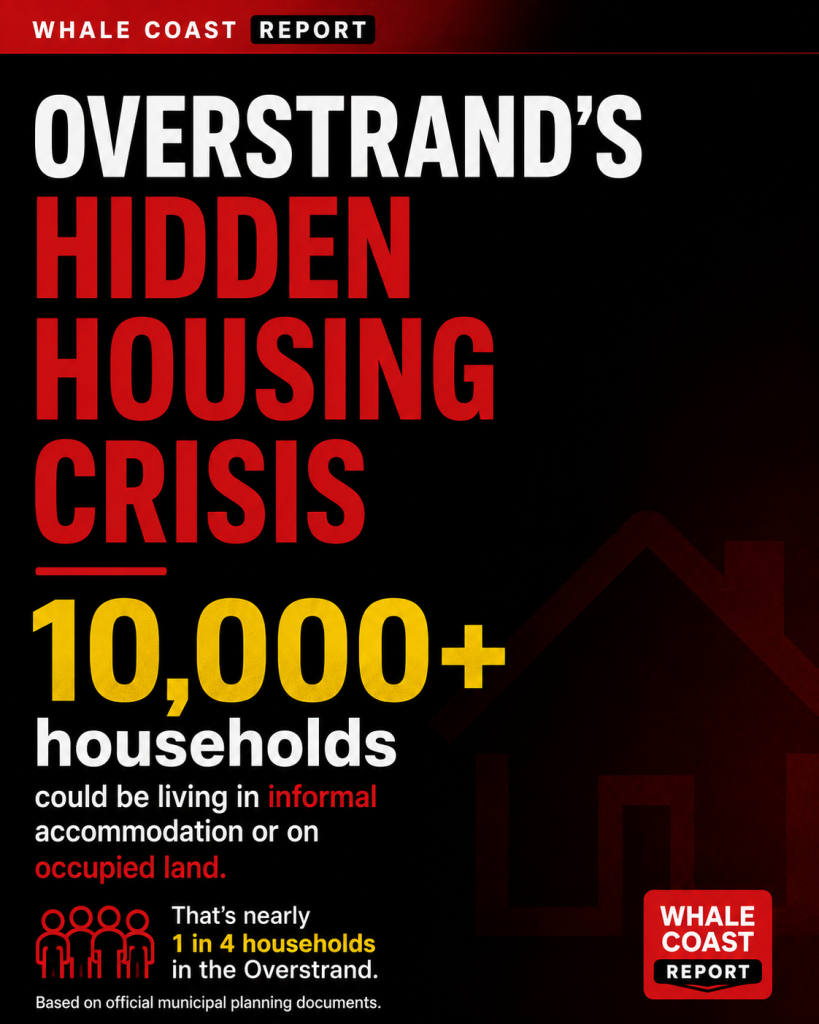
But a closer look at the municipality’s own planning documents tells a much bigger story. While the figure of 3,078 is correct, it represents only part of the picture. Other official municipal planning documents identify at least another 7,284 households living in separately recorded informal areas – a category that is not included in the recognised informal settlement statistics. The municipality is in the process of formalising some of these areas.
Taken together, the municipality’s own planning documents suggest there could now be more than 10,000 households living in informal structures or on occupied land across the Overstrand.
That suggests that roughly one in every four households in the municipality could be living in informal housing or on occupied land.
Why the numbers differ
The different figures are not necessarily contradictory. They measure different things.
The municipality’s figure of 3,078 informal households refers to recognised informal settlements and emergency housing areas where it provides communal services such as taps and toilets.
These settlements are managed by the municipality and form part of its normal service delivery programme.
The much larger figure of 7,284 households comes from the municipality’s Water Services Development Plan, where these households are recorded separately from areas where the municipality is already providing services.
These areas present different legal, planning and service delivery challenges.
In other words, the municipality is using two different categories of informal housing.
Kleinmond illustrates the difference
The distinction becomes clear when looking at Kleinmond. For many years, the town was known as a quiet retirement destination with a relatively small informal settlement.
Today, that picture has changed dramatically.
Municipal records identify 497 households in the recognised Overhills informal settlement. However, the same planning documents record 611 additional households living on occupied land behind the sports grounds and adjacent to Overhills.
Together, that amounts to 1,108 informal households in Kleinmond alone — more than double the number reflected in the official informal settlement statistics. It also explains why many residents have questioned whether the municipality’s official figure of 3,078 informal households accurately reflects what they see on the ground.
The municipality’s planning documents do not provide a town-by-town breakdown for the other areas, only the overall total for the Overstrand.
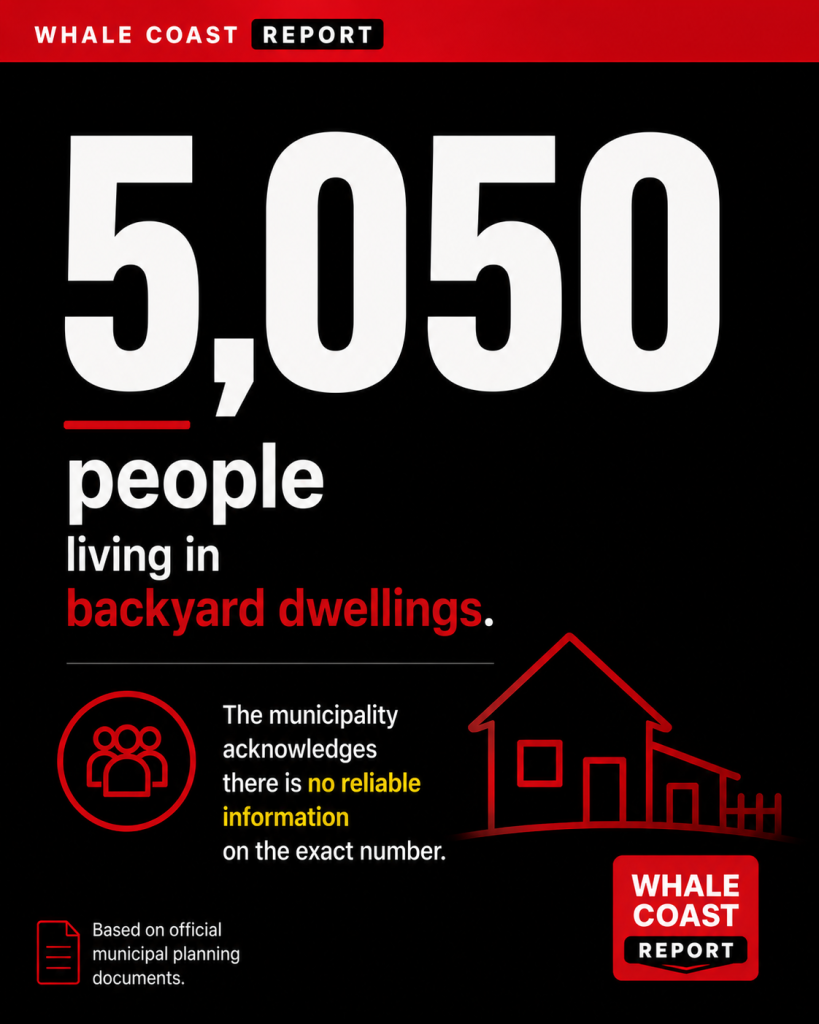
And even that may not tell the full story. The figures do not include people living in backyard dwellings across the Overstrand. Municipal data estimates there are about 5,050 backyard dwellers, but acknowledges there is no reliable information on the exact number, making it difficult to plan for future housing needs. If those people were to form independent households, they could add well over 1,000 additional households to the municipality’s housing demand.
Taken together, the rapid growth of informal settlements, thousands of people living in backyard accommodation and continued population growth point to one conclusion: the demand for affordable housing in the Overstrand is likely to be significantly greater than official informal settlement figures alone suggest.
Why this matters
The debate is about far more than numbers. Every household, whether in a recognised settlement or on occupied land, represents people who need access to water, sanitation, refuse removal, electricity, roads, clinics, schools and, ultimately, permanent housing.
As informal settlements continue to grow, so too does the pressure on municipal infrastructure, housing programmes and public finances.
Understanding the scale of that challenge is essential for residents, councillors and policymakers alike.
The bigger picture
The municipality’s figures highlight an important reality. The number of recognised informal households receiving municipal services is around 3,078.
But when households living on occupied land are also considered, the municipality’s own planning documents suggest the Overstrand’s informal housing challenge is substantially larger — potentially affecting more than 10,000 households.
Whether the municipality can keep pace with that demand will be one of the defining questions facing the Overstrand over the next decade.


What do you think?
Comments